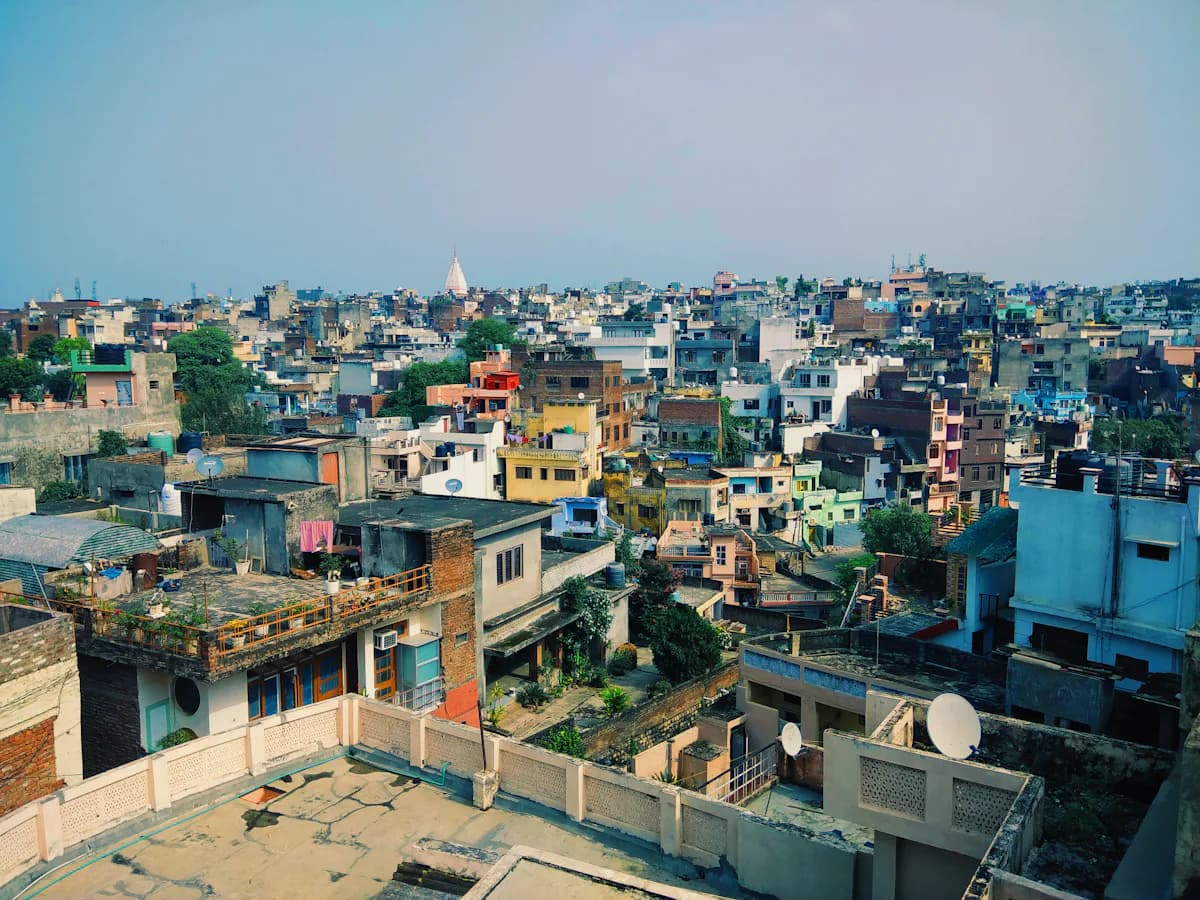
Most of India’s rain falls in four monsoon months. A practical, evidence-backed checklist for roofs, drains, walls, windows and electrical safety before the first heavy shower.
According to the India Meteorological Department, the south-west monsoon from June to September brings most of India’s annual rainfall. In Lucknow and much of north India, that means three or four months in which a home takes more water in a few weeks than in the rest of the year combined. Every weakness gets tested at once.
The cheapest time to fix those weaknesses is before the first heavy shower. Here is what to check, and the reason behind each item.
Roof and terrace
- Clear every rainwater outlet and grating. A blocked outlet turns the terrace into a pond, and standing water finds every crack.
- Look for cracks, especially at parapet corners and around water-tank legs and pipes. These joints move with heat and open first.
- Check the waterproofing and any reflective coat for peeling or blisters. If in doubt, a ponding test settles it.
- Trim branches that drop leaves into gutters or rub the parapet.
Walls and windows
- Seal cracks in external plaster before they let rain into the wall for three months.
- Check the sealant around window and door frames; gaps here cause the damp patches under windows that appear in August.
- Look at sills and chajjas (sunshades): they should slope away from the wall and have a drip groove underneath.
Drains and plumbing
- Clean floor traps, balcony drains and the main inspection chambers. Heavy rain backs up blocked lines into ground-floor bathrooms.
- Fix dripping taps and weeping joints now; walls that are already damp have no capacity left for rain.
- Make sure the overhead tank lid is closed and the overflow pipe discharges away from the wall.
Electrical safety: the most important item
Water and electricity are a deadly mix. A residual current circuit breaker (RCCB), made to standards such as IS/IEC 61008, cuts the power within a fraction of a second when current leaks to earth, typically at 30 mA for protection against electric shock. India’s wiring code, IS 732, sets out how installations should be protected and earthed.
- Press the RCCB’s test button. If it does not trip, get it replaced before the rains.
- Check that sockets, especially for the geyser, washing machine and outdoor points, are properly earthed.
- Look for damp around switchboards, the distribution board and meter; moisture there is an emergency, not a cosmetic issue.
- Keep the inverter and batteries off the floor in a dry, ventilated place.
Inside the home
The WHO’s guidelines on dampness and mould link damp homes with respiratory problems and asthma, so keeping moisture out is a health measure as much as a maintenance one.
- Service exhaust fans in bathrooms and kitchens: they remove the humidity that causes condensation and mould.
- Plan airflow for wardrobes and storage; damp, closed cupboards are where mould starts.
- Check wooden doors and frames: those that already rub will stick once they swell.
A simple timeline
- Six to eight weeks before the monsoon: inspect the roof, walls and windows, and book any waterproofing work while it is dry enough to do properly.
- Four weeks before: clean drains and outlets, service exhaust fans, and test the RCCB and earthing.
- One week before: clear outlets again (dust storms refill them), secure loose items on the terrace and balconies.
- After the first heavy rain: walk the house, check ceilings and walls, and note any new damp patch while it is small.
Warning signs to act on immediately
- Water near switchboards, the distribution board or the meter.
- An RCCB that does not trip when tested, or trips repeatedly in the rain.
- A ceiling that sags, bulges or drips.
- Cracks that widen or new diagonal cracks around doors and windows.
- Sewage or water backing up into ground-floor bathrooms.
Questions homeowners ask
What if I find a leak after the rains have started? Contain it, protect electrical points and furniture, and get the source traced. Some temporary measures are possible in the monsoon, but lasting waterproofing usually waits for dry weather.
Is a pre-monsoon check worth it for a new flat? Yes. New buildings often have untested waterproofing and drains, and defects are cheapest to raise with the builder early.
How RennovEN solves it
Every RennovEN Secure plan includes a pre-monsoon check of the terrace, drains and seals, carried out by our own plumbers, masons, electricians and carpenters, with labour included. Secure Plus and Elite add a moisture and thermal scan that finds hidden damp before it shows.
Not on a plan? Ask for a free quote and we will price a one-time pre-monsoon check and any repairs it finds.
Sources
- Monsoon reports and climatology · India Meteorological Department
- IS 732: Code of practice for electrical wiring installations · Bureau of Indian Standards
- IS/IEC 61008-1: Residual current operated circuit-breakers without integral overcurrent protection for household and similar uses (RCCBs) · Bureau of Indian Standards
- WHO Guidelines for Indoor Air Quality: Dampness and Mould · World Health Organization (2009)
General guidance for homeowners. Every home is different; a site assessment confirms the cause and the right fix.