Rising damp, penetrating damp, leaks and condensation each look similar but need different fixes. The science, the health risks, and how to find the real cause.
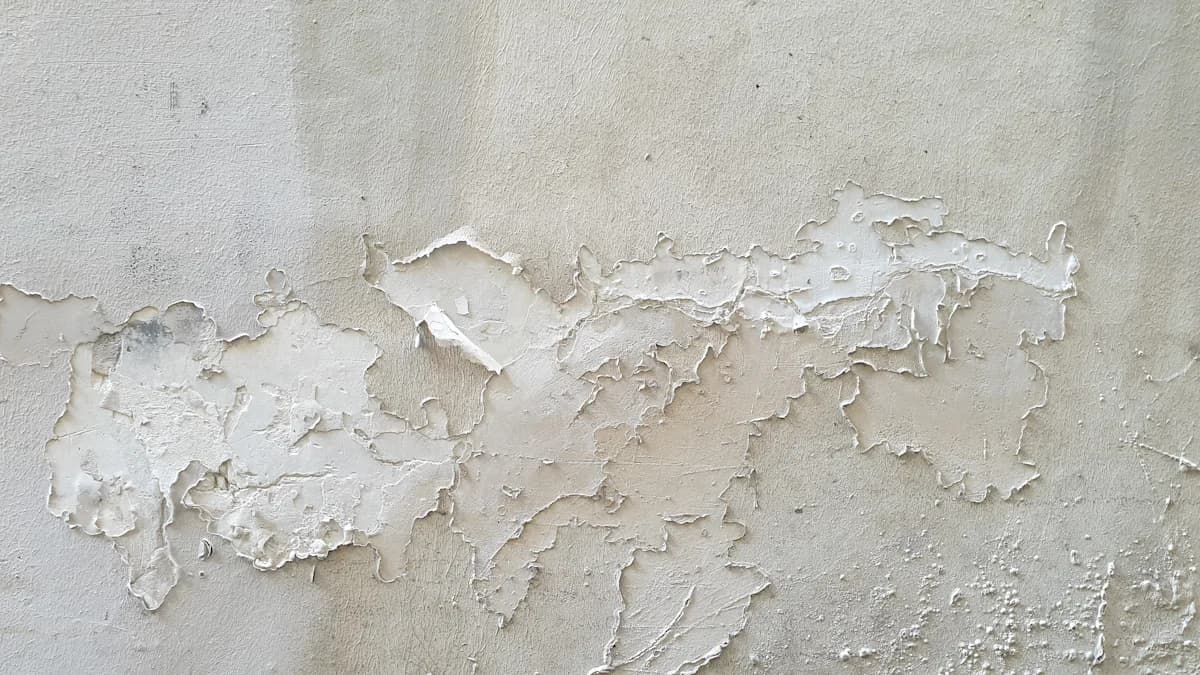
You repainted last year, and the patch is back: bubbling paint, a white powdery bloom, a musty smell, maybe black spots in a corner. The reason is that paint treats the symptom. The water is still getting into the wall from somewhere, and until that source is stopped, it will push the new paint off too.
Four different kinds of damp
Damp patches look similar, but there are four common causes, and each needs a different fix. Getting the diagnosis right is most of the job.
- Rising damp: ground moisture is drawn up into brick walls by capillary action, the same effect that pulls water up a strip of cloth. It shows as a band of damp and salts along the lower part of ground-floor walls, often up to around a metre, and usually means the damp-proof course (DPC) is missing, damaged or bridged.
- Penetrating damp: rain gets in from outside through cracked plaster, failed external paint, gaps around windows or a leaking parapet. It is worse in and after the monsoon and often appears high on walls or around openings.
- Leaks: a concealed pipe joint, a bathroom with failed waterproofing, or a blocked floor trap feeds water into the wall. These patches often sit on walls shared with bathrooms and kitchens and stay damp all year.
- Condensation: warm, humid indoor air meets a cooler surface and water forms on it, like on a cold glass. It is common in poorly ventilated bathrooms, kitchens and wardrobes, and often brings mould.
Why the paint bubbles and the white powder appears
Water moving through a wall dissolves salts from bricks, mortar and soil. When it evaporates at the surface, the salts are left behind as a white, fluffy deposit called efflorescence. When the water evaporates just behind the paint, the growing salt crystals push the paint and even the plaster off. That is why simply scraping and repainting fails: the salts and the moisture are still there.
Damp is a health issue, not just a looks issue
The World Health Organization’s guidelines on dampness and mould (2009) concluded that living in damp, mouldy buildings is associated with more respiratory symptoms, respiratory infections and worsening asthma. Mould needs persistently damp surfaces to grow; reducing moisture is the most effective way to prevent it. Children, elderly family members and anyone with asthma are most at risk.
How the cause is found
- Look at the pattern: a tide-mark band at the bottom of the wall suggests rising damp; patches around windows or high on external walls suggest rain; patches beside bathrooms suggest a leak; spots in cold corners and behind wardrobes suggest condensation.
- Measure, don’t guess: a moisture meter compares readings with a known dry wall, and maps how far the damp spreads.
- Use a thermal camera: wet areas usually show up cooler because evaporation cools them, so a thermal image can reveal damp behind fresh paint and trace it to its source.
- Check the timing: does it get worse after rain, after showers, or in the winter mornings?
Fixing it for good: source first, finish last
- Rising damp: restore or install a damp-proof course, for example by chemical injection where appropriate, then replace salt-contaminated plaster with a suitable render.
- Penetrating damp: repair cracks and external plaster, seal window frames, fix parapets and copings, and apply a breathable exterior coating.
- Leaks: find and repair the pipe joint or redo the bathroom waterproofing, then dry the wall before replastering.
- Condensation: improve ventilation with exhaust fans and airflow, reduce indoor moisture sources, and insulate cold spots.
- Only once the wall is dry: replaster where needed and paint with a breathable system.
Read the clues: what each pattern usually means
- A horizontal band of damp and white salts along the bottom of a ground-floor wall: rising damp.
- Damp that grows after rain and fades in dry weather, often on external walls or under windows: penetrating damp.
- A patch on a wall shared with a bathroom or kitchen that stays damp all year: a plumbing leak or failed bathroom waterproofing.
- Black spots in corners, on ceilings or behind wardrobes, worse in winter mornings: condensation and mould.
- Damp on a top-floor ceiling: the roof (see our terrace waterproofing guide).
What you can do today
- Ventilate: run bathroom and kitchen exhausts during and after use, and open windows when the air outside is drier.
- Move furniture a few centimetres away from cold external walls so air can circulate.
- Wipe mould with a suitable cleaner while wearing gloves and a mask, and keep children and people with asthma away from the area while you work. Cleaning does not fix the cause, but it reduces exposure.
- Do not seal the wall with oil paint or waterproof putty from the inside. Trapped moisture moves sideways and up, and often makes the patch larger.
Common myths
- “Waterproof paint on the inside will stop it.” Paint cannot hold back water pressure or salts coming through the wall; it peels.
- “Damp means the wall needs to be rebuilt.” Usually not. Once the source is stopped and salts are dealt with, the wall can be replastered and repainted.
- “It is just the monsoon.” If a patch is still damp in the dry season, the water is coming from somewhere other than rain.
Questions homeowners ask
How long does a wall take to dry? It varies with the wall thickness, the season and ventilation. Thick masonry can take weeks or months. That is why the finish goes on last, once readings show the wall is dry.
Can a damp wall damage electrical wiring? Moisture around concealed wiring, switches and boards is a safety risk. Have it checked, and make sure the RCCB trips when tested.
How RennovEN solves it
Our team diagnoses before it treats. We read the wall with a moisture meter against a dry reference, scan it with a thermal camera, and check the bathroom, plumbing, roof and exterior that could be feeding it. You get a written finding of the cause, not a guess.
Your quote then fixes the source first and the finish last, so the damp does not come back. Complete renovation projects carry our 10-year warranty, and RennovEN Secure catches new leaks early with scheduled checks.
Sources
- WHO Guidelines for Indoor Air Quality: Dampness and Mould · World Health Organization (2009)
- IS 3067: Code of practice for general design details and preparatory work for damp-proofing and waterproofing of buildings · Bureau of Indian Standards
- BRE Digest 245: Rising damp in walls — diagnosis and treatment · Building Research Establishment (UK)
General guidance for homeowners. Every home is different; a site assessment confirms the cause and the right fix.