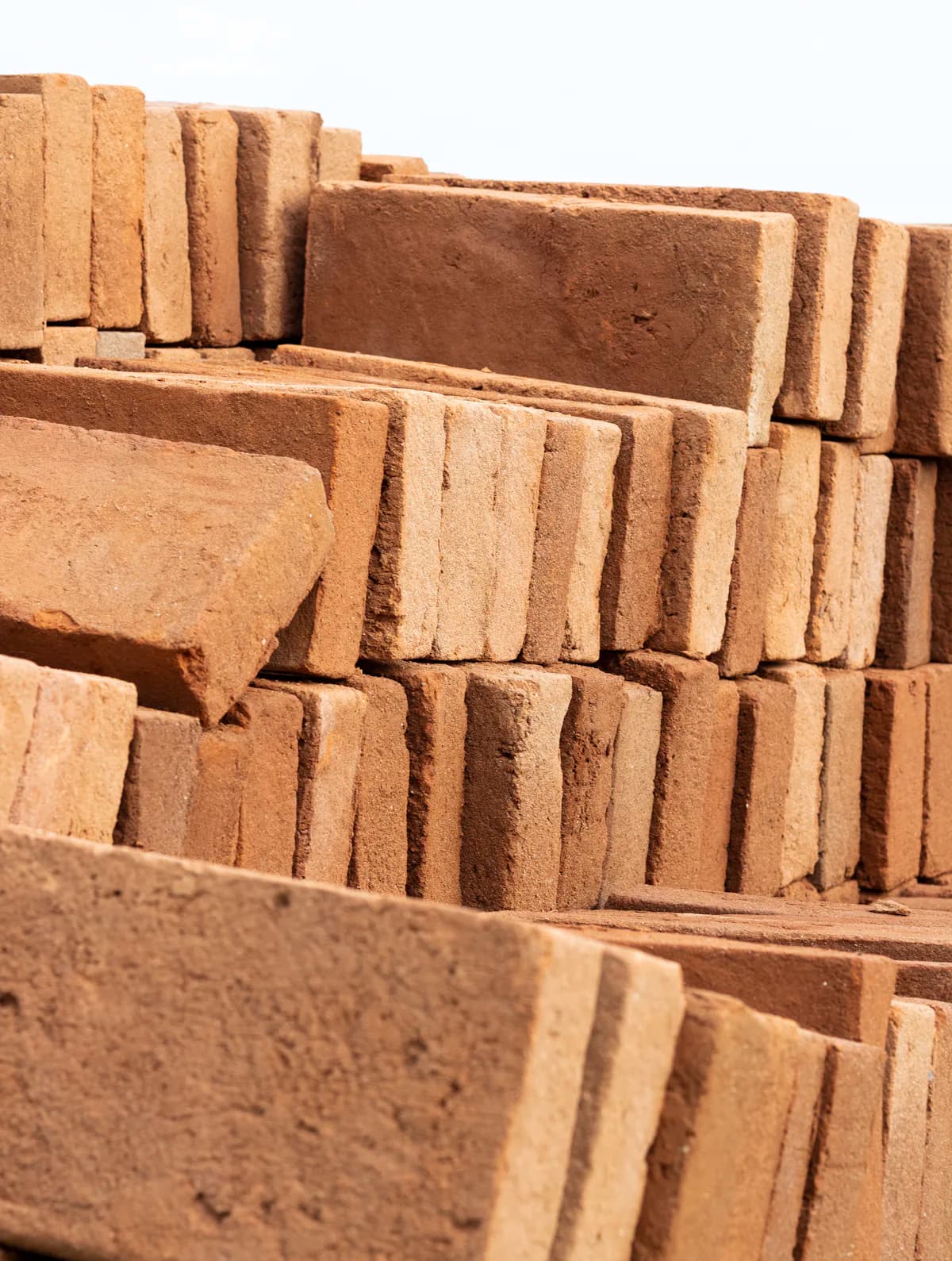
Why cement and fired bricks carry a large carbon footprint, and which proven Indian alternatives, from fly-ash bricks to AAC blocks and low-VOC paints, are worth choosing.
A home is built once and lived in for decades, so the materials you choose shape its comfort, running costs and environmental footprint for a long time. The good news: several greener choices are also well tested, covered by Indian standards and easy to source.
Why materials matter: the carbon in cement and bricks
Cement is made by heating limestone in kilns, which releases carbon dioxide both from the fuel and from the chemical reaction itself. A widely cited Chatham House report (2018) estimated that cement production accounts for around 8% of global CO₂ emissions. Traditional fired clay bricks are also energy-intensive, and India’s brick kilns are a known source of air pollution.
Using less cement where it is not needed, and choosing lower-impact masonry, reduces this footprint without compromising strength when it is done to standard.
Proven alternatives
- Fly-ash bricks (IS 12894): made from fly ash, a by-product of coal power plants, with lime or cement. They are uniform in size, need less plaster, and put an industrial waste to use. Government notifications have long encouraged their use near thermal power plants.
- AAC blocks (IS 2185 Part 3): autoclaved aerated concrete is light and contains millions of tiny air pockets, so it insulates better than solid masonry and reduces the load on the structure. Large block sizes also mean fewer joints.
- Blended cements such as PPC (Portland Pozzolana Cement) and PSC (slag cement): they replace part of the clinker with fly ash or slag, cutting embodied carbon, and are suitable for most residential work when specified correctly.
- Low-VOC paints: volatile organic compounds evaporate from some paints and affect indoor air quality. Low-VOC options reduce that smell and exposure, which matters for bedrooms and nurseries.
- Water-efficient fittings: low-flow taps, dual-flush cisterns and aerators cut water use daily without feeling different.
Sustainable is also durable
The greenest building is one that does not need rebuilding. Good waterproofing, correct concrete cover over steel, proper curing and regular maintenance extend a home’s life far more than any single eco-label. Rating systems such as GRIHA, developed in India, reward exactly this combination: efficient materials, energy and water savings, and durability.
Check before you buy
- Ask for the standard and grade on the bill (for example IS 12894 for fly-ash bricks).
- Check that blocks and bricks are cured and undamaged on delivery.
- Use the right mortar and plaster for AAC blocks; ordinary practice can cause cracks.
- Keep test certificates for cement and steel with your project file.
Comparing common walling options
- Fired clay bricks: familiar, strong and widely available, but energy-intensive to make; quality varies between kilns.
- Fly-ash bricks: uniform size, use an industrial by-product, need less plaster; check the standard and curing.
- AAC blocks: light and better insulating, large sizes mean faster building; need the right adhesive or mortar and care at joints to avoid cracks.
- Solid concrete blocks: strong and uniform, but heavier and less insulating than AAC.
Lower-impact choices beyond the walls
- Light-coloured, reflective roof finishes reduce heat gain and cooling energy for the life of the house.
- LED lighting and efficient fans reduce electricity use every day.
- Rainwater harvesting and recharge pits make use of monsoon rain instead of sending it to the drain.
- Locally made materials reduce transport emissions and are easier to replace later.
- Durable finishes that do not need frequent replacement often beat “eco” products that wear out quickly.
Common myths
- “Green materials are always more expensive.” Fly-ash bricks and blended cements are often comparable in cost, and efficiency savings continue for years.
- “Lighter blocks are weaker.” AAC blocks are designed for non-load-bearing walls in framed buildings; used correctly, they perform well.
- “Sustainability is only about materials.” How long a house lasts and how much energy it uses every year matter just as much.
Questions homeowners ask
Can I use fly-ash bricks for my whole house? In a framed RCC house the walls are usually infill, and fly-ash bricks are widely used for them. Your structural engineer confirms what suits each wall.
Do green choices affect resale? Buyers increasingly value lower electricity bills, cooler rooms and good-quality construction, all of which these choices support.
How RennovEN solves it
When we build or renovate, our itemised quotation names every material by type, grade and brand, so you can choose greener options and see exactly what they change. Our engineers then check that what arrives on site matches what was quoted.
Building with your own contractor? RennovEN Ensure verifies materials and grades at every stage, and our Managing Director’s long relationships with manufacturers help us source quality materials directly.
Sources
- Making Concrete Change: Innovation in Low-carbon Cement and Concrete · Chatham House (2018)
- IS 12894: Pulverized fuel ash–lime bricks — Specification · Bureau of Indian Standards
- IS 2185 (Part 3): Concrete masonry units — Autoclaved cellular (aerated) concrete blocks · Bureau of Indian Standards
- GRIHA: Green Rating for Integrated Habitat Assessment · GRIHA Council
General guidance for homeowners. Every home is different; a site assessment confirms the cause and the right fix.