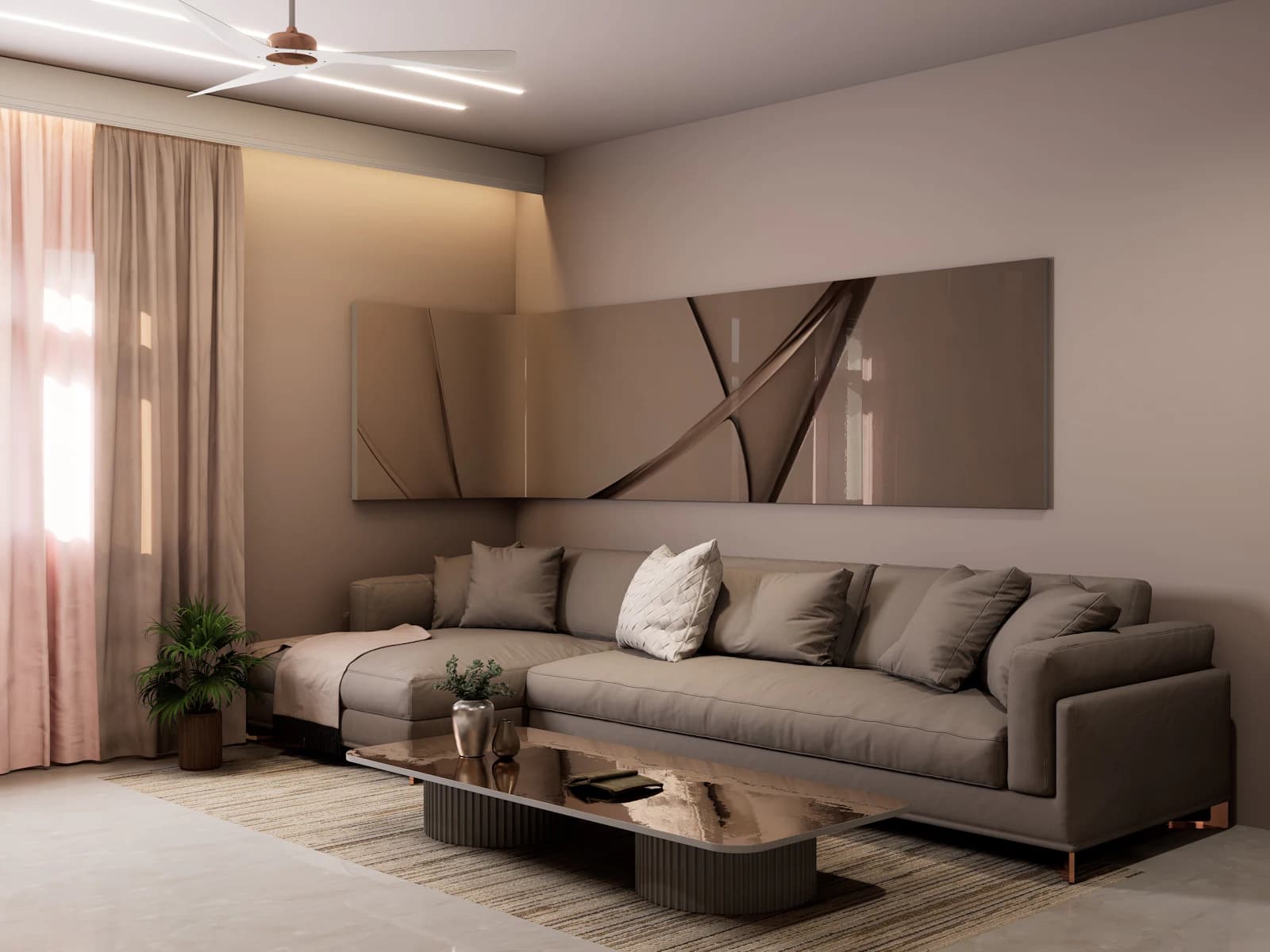
What research says about clutter and wellbeing, and how to plan storage, light and furniture so an Indian family home feels calm and still works for daily life.
Minimalism is often shown as a white, empty room. Real Indian homes are different: joint families, festivals, guests, pooja corners, school bags and pressure cookers. Done well, minimalism is not about owning nothing. It is about every object having a place, so the home feels calm and is easy to run.
What research says about clutter
Environmental psychologists have studied how our surroundings affect us. In one well-known study (Saxbe and Repetti, 2010), people who described their homes as cluttered or unfinished showed less healthy daily patterns of the stress hormone cortisol and more depressed mood across the day. Another study (Roster, Ferrari and Jurkat, 2016) found that clutter reduced people’s satisfaction with and attachment to their homes.
The lesson is practical, not aesthetic: when things do not have a place, they spill onto surfaces, and that visual noise adds to daily stress.
Storage first, decoration later
- Count before you build: list what each room must store (clothes, bedding, suitcases, utensils, documents, festival items) and plan storage for it.
- Go to the ceiling: lofts above wardrobes hold suitcases and seasonal bedding that otherwise sit on top of cupboards.
- Closed over open: closed shutters keep dust and visual noise down; keep open shelves for a few chosen things.
- Plan for daily routines: a shoe rack at the door, a charging and keys drawer, and a school-bag spot stop clutter where it starts.
- Respect the pooja space: a dedicated unit with storage below keeps it serene and easy to clean.
Light and colour do half the work
Daylight makes rooms feel larger and calmer. Keep window walls free of tall furniture, use light-coloured walls and sheer curtains for the day with blackout layers for the night. A restrained palette, two or three base colours with natural textures like wood and cane, keeps the eye relaxed.
Fewer, better pieces
A smaller number of well-made, correctly sized pieces beats many cheap ones. Furniture that fits the room, rather than a catalogue size, leaves walkways clear and avoids awkward gaps that collect clutter.
A room-by-room plan
- Entrance: a closed shoe cabinet, a bench to sit on and hooks for bags, so nothing lands on the sofa.
- Living room: a TV unit with closed storage for remotes, wires and set-top boxes; one statement piece rather than many small ones.
- Kitchen: tall pantry units and drawers instead of deep shelves, so things at the back stay visible and used.
- Bedrooms: wardrobes to the ceiling with lofts; a bed with storage for quilts and seasonal bedding.
- Children’s rooms: low, labelled storage children can reach, so tidying becomes their job too.
Make the most of light
Daylight changes how large and calm a room feels. Mirrors placed to reflect a window, pale floors and walls, and keeping window areas clear of tall furniture all bring more light deeper into the room. Layered lighting at night, with soft general light and focused task lights, avoids the harsh look of a single bright tube light.
Keep it calm over time
- One in, one out: when something new comes home, something old leaves.
- A monthly ten-minute reset of the surfaces that collect clutter: dining table, bedside tables, entrance.
- Seasonal swaps: festival décor, winter bedding and summer clothes stored up high, rotated twice a year.
- Choose finishes that are easy to clean; a home that is easy to keep tidy stays tidy.
Questions homeowners ask
Does minimalism suit a joint family? Yes, if it is planned around storage rather than emptiness. More people means more things, so built-in storage matters even more.
Is minimalism expensive? Usually the opposite: fewer, well-chosen pieces cost less over time than many cheap ones that wear out.
How RennovEN solves it
RennovEN Decor designs storage around your family’s actual routine. We measure your rooms, then make wardrobes, beds, TV units, shoe racks and pooja units to fit, in the materials and finishes you choose, and install them.
If the room also needs work, such as damp treatment, rewiring or better lighting, our renovation team handles it in the same project.
Sources
- No place like home: Home tours correlate with daily patterns of mood and cortisol · D. E. Saxbe and R. Repetti, Personality and Social Psychology Bulletin, 36(1) (2010)
- The dark side of home: Assessing possession “clutter” on subjective well-being · C. A. Roster, J. R. Ferrari and M. P. Jurkat, Journal of Environmental Psychology, 46 (2016)
General guidance for homeowners. Every home is different; a site assessment confirms the cause and the right fix.